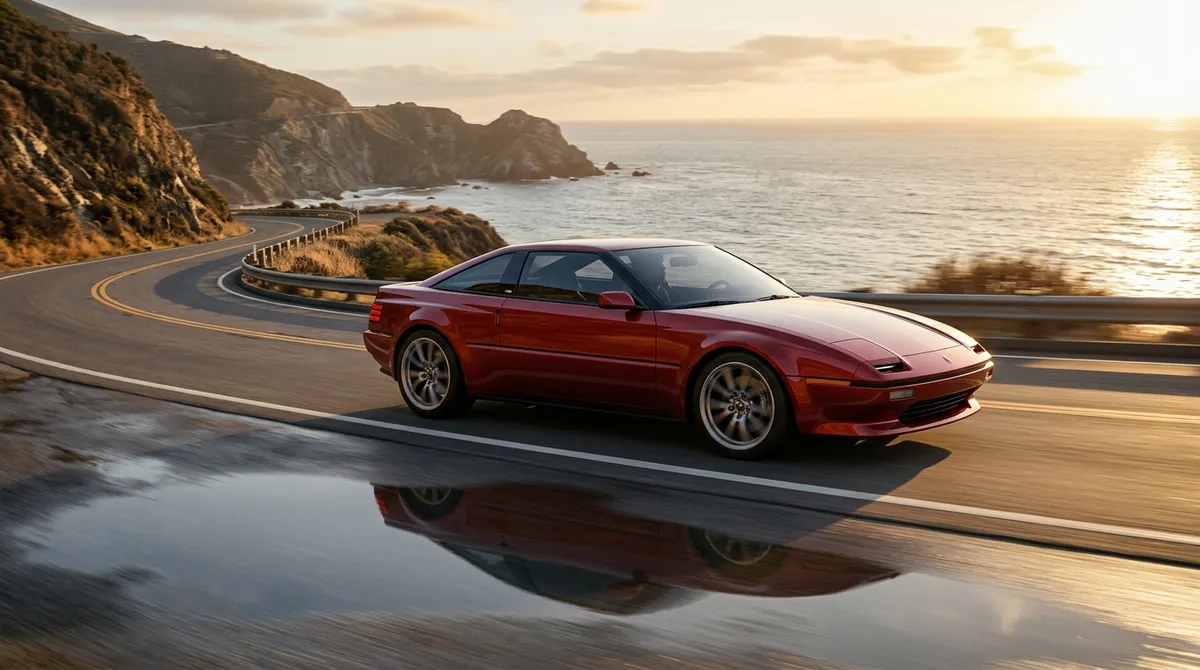

A virtual Dodge Copperhead concept is making the rounds, and it asks a fun question: what if the Challenger came back not as a nostalgic coupe, but as a stretched, track-minded longtail built to take on the Ford Mustang GTD? You won't find a real car here. What you will get is a clear look at what a Challenger halo could be, and a way to judge whether Dodge should ever build one.
What the Copperhead Is
Per Autoevolution, the Copperhead is the latest work from Timothy Adry Emmanuel, the digital artist who goes by "adry53customs" on social media. Autoevolution describes his output as a continuing run of dream-car projects within the CGI car world.
This one reimagines the Challenger as a longtail, with the Mustang GTD as its obvious target. To be clear, it's a rendering. Nothing in the reporting points to a Dodge program, a prototype, or any official involvement.
Why a Longtail Challenger Is an Interesting Idea
The Challenger has long been defined by its retro shape and big-coupe presence. A longtail treatment flips that script. It trades pure nostalgia for something that reads as purpose-built and performance-first.
That contrast is what makes the concept worth a look. Muscle cars usually say "heritage." A longtail says "special edition for people who care about the track." Combining the two is the whole pitch of the Copperhead.
The Case for Dodge Answering the Mustang GTD
The Mustang GTD is the benchmark the concept is aimed at: a limited-run, design-led halo car from a rival muscle brand. Whether you love or question that formula, it has changed what a muscle nameplate can aspire to.
Here's my take, not a reported fact: a halo car does more than sell units. It gives a brand something to point at when it talks about its identity. If muscle-car identity is in flux, as the shift toward electrification and limited-run performance models suggests, a flagship is one way to plant a flag.
The counterargument is just as fair. Halo cars are expensive to develop and produced in small numbers. A concept render carries none of that burden, which is precisely why it's easy to want one.
Why Fan-Made CGI Matters
Digital concepts like the Copperhead cost nothing but time and imagination, so artists can explore ideas that manufacturers would never risk showing. They also shape the conversation. When a render circulates among enthusiasts, it becomes a talking point about what an icon like the Challenger could become next.
You can use that to your advantage as a car fan. Treat renders as a design sandbox:
- Compare proportions. Put the Copperhead's longtail styling next to real-world performance cars and see which cues hold up.
- Ask what's missing. Renders skip cooling, aero testing, and packaging. Those constraints are where real cars get hard.
- Notice the audience reaction. What people praise in a render tells you what they wish automakers would build.
What It Says About the Challenger's Future
The Challenger's next chapter is an open question, and concepts like this fill the vacuum. Some fans want a straight revival. Others imagine an electrified successor. The Copperhead takes a third route: a rare, dramatic flagship rather than a volume car.
That's a reasonable thing to debate, and it doesn't need a press release to start. Nothing in Autoevolution's coverage suggests Dodge is considering it, so treat the Copperhead as a conversation piece.
The Takeaway
Next time a CGI concept grabs you, don't just scroll. Pick one real car it's competing with, compare the two side by side, and decide what you'd actually want Dodge to build. That exercise tells you more about the Challenger's future than any render can.